OnlyFans as a Couple: The Ultimate Guide to Your Success
- Fans pay for chemistry, not for performance. Documented everyday scenes beat staged fantasy on a couple account, which also means production usually costs less than on a comparable solo account.
- Couple-POV at 40–50% of the mix is the format a solo account cannot copy. Custom requests at $150–800 are the single most profitable lever on top of it.
- One partner leads content, the other leads chat, and both signs go on paper. Couple-POV shoots, custom approvals and the monthly books stay joint. Separate payout accounts, a 10–20% reinvestment pot, and a break-up clause, all agreed before the first dollar lands.
- What goes wrong most often is the missing role split. Around week 4 to 6 both partners feel they are carrying 60% of the work, and that is the point where DMs start sitting unanswered.
Couple accounts on OnlyFans serve a niche of their own. Fans pay for the sense of something real, not for solo performance. That shifts the content, the chat style and the pricing from the ground up. At MAHO we manage over 20 creators, including several couple accounts, and our documented top month for a single creator sits at $352,000. In this guide we lay out what makes couple accounts different, how we split the work between two people and where the traps sit that solo guides never mention.
1. Why are couple accounts different?
Because a couple account isn't a solo account with extra staff. The product logic is different, the fan motivation is different, and the way work gets divided follows its own rules. Couples who don't grasp that up front build from a solo playbook and then wonder why their conversion flatlines.
The authenticity premium
Fans of couple accounts pay for one very specific promise: real chemistry between two real people. Most solo accounts run on staged scenes and role-play. For couples, the opposite is the selling point. The more real, the more everyday, the less it looks like a porn set, the better. That's why couple accounts often produce at lower cost than comparable solo accounts.
Niche fit and fan profile
The couple segment attracts a different fan base to solo. You see more amateur fans, couple-POV fans, cuckold niches and voyeur fans. You see fewer classic fantasy fans looking for a projection surface. In practice that means your pricing, your teasers and your DM scripts have to be built differently. A solo teaser ("imagine you were here with me") converts worse with couple fans than a voyeur framing ("watch what we got up to last night").
Double workload, not double output
In theory, two of you can put out twice the social, twice the content, twice the DM work. In practice we often see the opposite on couple accounts: both partners do 60% of the work because nobody's clear on who owns what. Without a written role split you end up slower than a solo account, not faster. Role split isn't a nice-to-have, it's the single biggest difference between couple accounts that work and couple accounts that stall out in our portfolio.
2. Who does what inside the account?
One partner leads content, the other leads chat, and everything that only works with both of you goes into a shared bucket — agreed in writing, not "we'll sort it out as we go". On every new couple account in our portfolio we start by locking down a role matrix before we even talk content. Without one, the first conflicts show up after 4–6 weeks, almost always in the same places.
Who does what: the base matrix
In practice, couple accounts that run well end up with nearly the same division of labour. One partner takes the content lead, the other takes the chat lead, and a shared bucket covers everything that only works with both of you. Here's the matrix we start from with couples in our portfolio:
| Task | Creator 1 (Content lead) | Creator 2 (Chat lead) | Shared |
|---|---|---|---|
| Selfies, solo clips, stories | Main | — | — |
| DM replies during the day | — | Main | — |
| PPV drops and mass sends | — | Main | Review |
| TikTok / Instagram channel | Own | Own | — |
| Couple-POV shoots | — | — | Both, always |
| Custom requests triage | Input | Build the offer | Approve together |
| Editing and post-production | Main | — | — |
| Accounts, tax, banking | — | — | Monthly together |
The matrix looks plain on paper, but in practice it solves 80% of the friction specific to couple accounts: who reads the DMs at 11pm, who replies to the third custom request of the week, who signs off on a PPV price change. All without either partner feeling the other one is slacking.
3. What content works on a couple account?
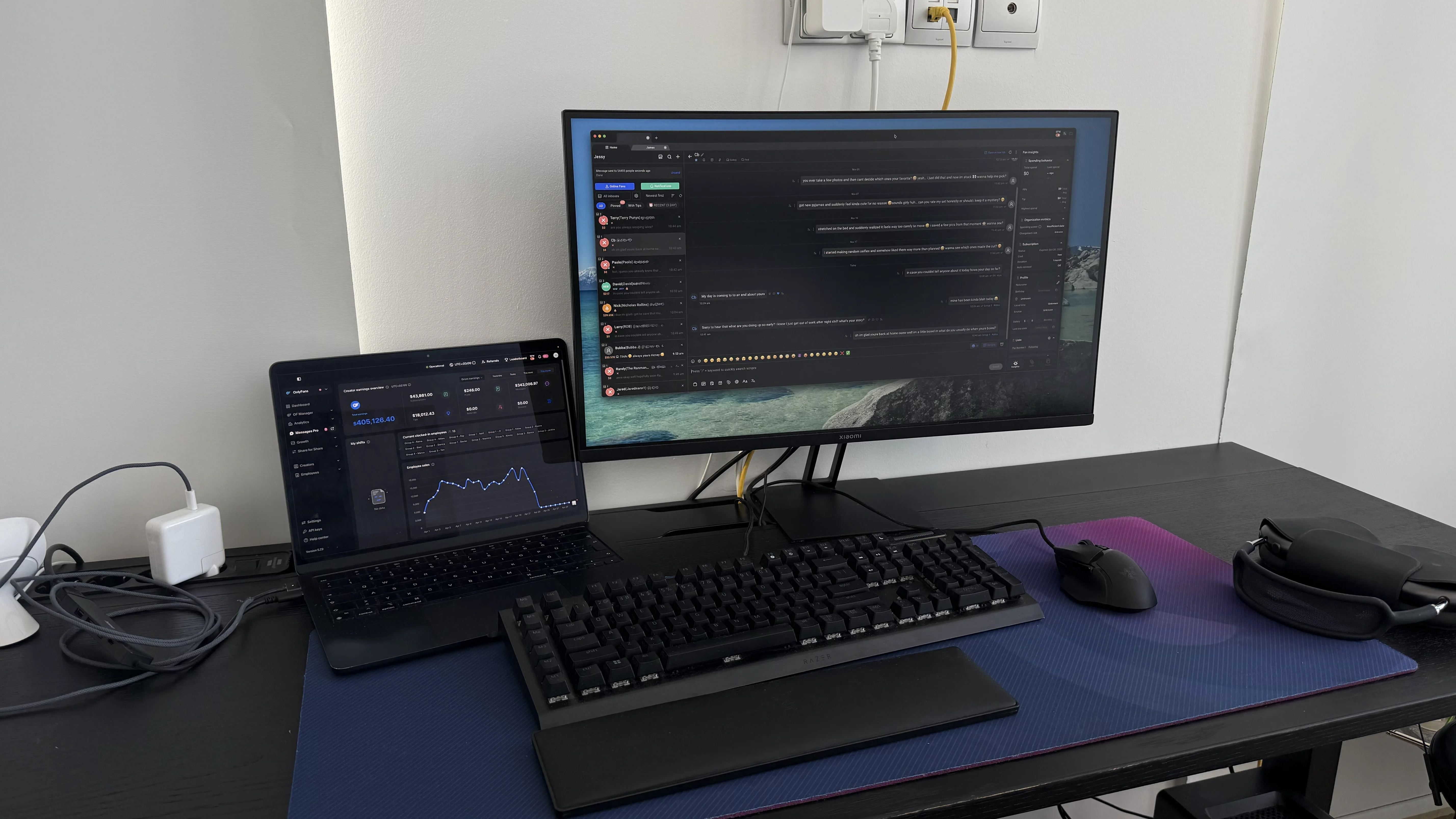
Documented intimacy, not staged fantasy. Solo content lives on fantasy and projection. Couple content lives on documentation: the fan wants to feel like they're eavesdropping on something that would have happened anyway. In practice that means four content buckets we combine on nearly every couple account in our portfolio.
| Content type | Share | Function | Price band |
|---|---|---|---|
| Couple-POV | 40–50% | Main selling point: real-feeling scenes together | Standard PPV $15–25 |
| Solo per partner | 20–30% | Serves fans who prefer one partner, fills feed posts | Standard PPV $10–20 |
| Real-couple moments | 15–20% | Everyday, BTS, breakfast, travel stories — bonding and authenticity | Feed / story, no PPV |
| Custom requests | 10–15% | Tailored scenarios for paying top fans | $150–800, scaled to effort |
Couple-POV: your USP
The POV shot ("from his point of view", "from hers") is the format solo creators can't deliver. Camera on a tripod or held by one of you, the scene feels natural, minimal cutting, minimal setup. On couple accounts that run POV as the core format we see noticeably higher PPV unlock rates than on those that copy a solo playbook. POV is your moat.
Real-couple moments as the bond
Between the explicit drops your feed needs bonding content: breakfast together, a car ride on the way to a holiday, mirror selfies as a pair, pet names, the daft little shorthand couples have. It costs next to nothing, but it builds the insider feeling we talk about in our other guides. Fans who feel like they're "part of the relationship" renew and tip well above average.
Pricing custom requests properly
Custom requests are the single most profitable lever on a couple account, and at the same time the most common source of friction between the two of you. Every request comes with the same question: are we doing this or not? That's why the request triage sits in the role matrix. The chat lead takes it in, the content lead checks if it's workable, and approval is always joint. No custom ever gets accepted while one partner is unsure. Not once.
4. How do you price and split the revenue?
Pricing on couple accounts follows much the same playbook as solo: a $10 list price with a permanent promo of around 70% underneath (effectively around $3), messages as the main revenue line with more than 80% of the take across the accounts we manage. What's couple-specific is the question of how you split the money between the two of you.
Revenue split: in writing, from day one
The most common source of rows on couple accounts in our portfolio isn't jealousy. It's money, and it tends to show up once the account has grown far enough that the casual arrangement from the first evening no longer fits the amounts involved. What got sorted out casually on the first evening as "we'll share everything" looks quite different once there's real money on the table.
Our recommendation, before the first dollar comes in:
- A written agreement between the two of you on what happens with the income. 50/50, split by workload, with a separate reinvestment pot — whichever model you pick, put it in writing.
- Separate payout accounts, or a shared account with a clean monthly transfer to individual accounts. "All into one pot" always lands on one side eventually, and that's when couples blow up.
- A reinvestment pot of 10–20% for kit, travel, shoots and promo. Doesn't get paid out, stays in the business. Kills the argument about whether the new camera was "his" or "hers".
- A break-up clause. What happens to the account if you split up? Who keeps the fan base, who keeps the followers, who keeps the content? It sounds unromantic at the start, but it's the one thing that saves you £20,000 in solicitor fees if the worst happens.
5. What has to be sorted legally and for safety?
A couple account is legally two things at once: a joint business and two separate people appearing on the platform. Both have to be handled properly.
Verification and platform rules
If both partners appear in the content, both have to verify with ID on OnlyFans. Without that release only the verified account holder is allowed to show. Set the account up under one primary name and list the other partner as a release partner. Plan the verification before the first shoot, not after.
Privacy when there are two of you
Safety matters twice as much on a couple setup because clues stack up. Where you live, where you work, who you know: what one of you keeps out of frame, the other can accidentally show in the background. Agree a shared privacy standard: no views out of windows, no number plates, no work uniforms, no parcels with names on, no real first names in voice notes.
On the technical side: two-factor authentication on every account, a shared password manager, devices kept separate. If you store content, encrypt it. On couples the risk is higher because you can easily have twice as many devices running across two households.
Break-up scenario: plan for it
The awkward question first: what if you split up? We've seen couples in our portfolio survive that and move the account onto one person. We've also seen accounts fall apart because content rights were never clarified, fans got passed around, or one partner locked the other out. Agree before you start: who owns the account, who keeps the content, what happens to subscribers, who gets what share of the trailing revenue and for how long. That isn't distrust, that's basic hygiene.
Conclusion: couple accounts aren't solo with a bonus partner
Couple accounts aren't "solo with extra staff". They're their own niche with their own fan profile, their own content logic and their own traps. Couples who understand that get to play an advantage solo creators never have: real chemistry, double social reach, and POV content that can't be copied.
Couples who don't understand it build from a solo playbook and walk straight into the classic couple traps: no clear roles, no revenue split, no break-up scenario. The result is accounts that either plateau, or where the best month on record happened to land a few weeks before the row about the bank account.
The principle is the same as for every professionally run account in our portfolio: nothing gets left to chance. Roles in writing, content mix planned, pricing documented, revenue split in a contract, break-up thought through. Sort all of that on day one and from day 30 onwards your head is free for the part of the job that's actually fun.
Frequently asked questions
Do both partners have to verify on OnlyFans?
Yes, as soon as both partners appear in the content. OnlyFans requires ID verification for every person on camera. Without that release only the verified account holder is allowed to feature. Do the verification first, not after the first shoot.
How should we split the income between us?
There's no standard, but there is a standard recommendation: put it in writing before the first dollar lands. Common models are 50/50, a split by workload, or a separate reinvestment pot plus 50/50. What matters is separate payout accounts and a break-up clause for the worst case.
Do couples earn more than solo creators?
Not as a rule. In our portfolio, well set-up couples often ramp faster, because they get double social reach and couple-POV gives them a format solo accounts cannot match. They also carry double the coordination overhead, which is what usually eats the advantage back up. We do not quote a revenue band for couples, because the spread between a well-run and a badly-coordinated couple account is wider than the spread between couples and solos.
What happens to the account if we break up?
Sort it beforehand, not afterwards. Put it in the written agreement: who owns the account, who keeps the existing content, how long trailing payments run, what happens to social channels and fan lists. Couples who leave that question open tend to lose on both sides, because the account just collapses.
What content sells best for couples?
Couple-POV is clearly the biggest seller because it shows the chemistry between you and delivers what fans in the couple segment are paying for. Custom requests are the single most profitable lever, but they have to be properly approved. Solo content per partner fills the feed and serves fans with a preference. Everyday content (real-couple moments) doesn't sell directly, but it builds the bond that drives renewals.
What's the most common mistake on couple accounts?
No written role split. "We'll sort it out" turns into friction after 4–6 weeks because one partner starts to feel they're doing more, or DMs sit unanswered because nobody knows whose job it is. The second common mistake: no break-up scenario, because nobody wants to think about it at the start. Both are solved in half an hour if you do it early.

Lukas helps creators grow successfully on OnlyFans.
YouTube